When most Australian business owners think about social media marketing, Pinterest rarely makes the shortlist. Facebook, Instagram, TikTok, LinkedIn — these are the platforms that dominate the conversation. Pinterest tends to get dismissed as a place for wedding mood boards and home renovation inspiration.
That assumption is costing businesses real money.
Pinterest is not a social media platform in the traditional sense. It is a visual search engine, and it is one of the most powerful, underutilised tools available to Australian small businesses right now. If you sell products, offer services with a visual component, or want to drive consistent traffic to your website, Pinterest marketing for small business Australia deserves a serious look.
Why Pinterest Is Different From Every Other Platform
Most social media platforms are built around feeds. Content appears, gets a burst of engagement, and then disappears within hours or days. Pinterest works differently.
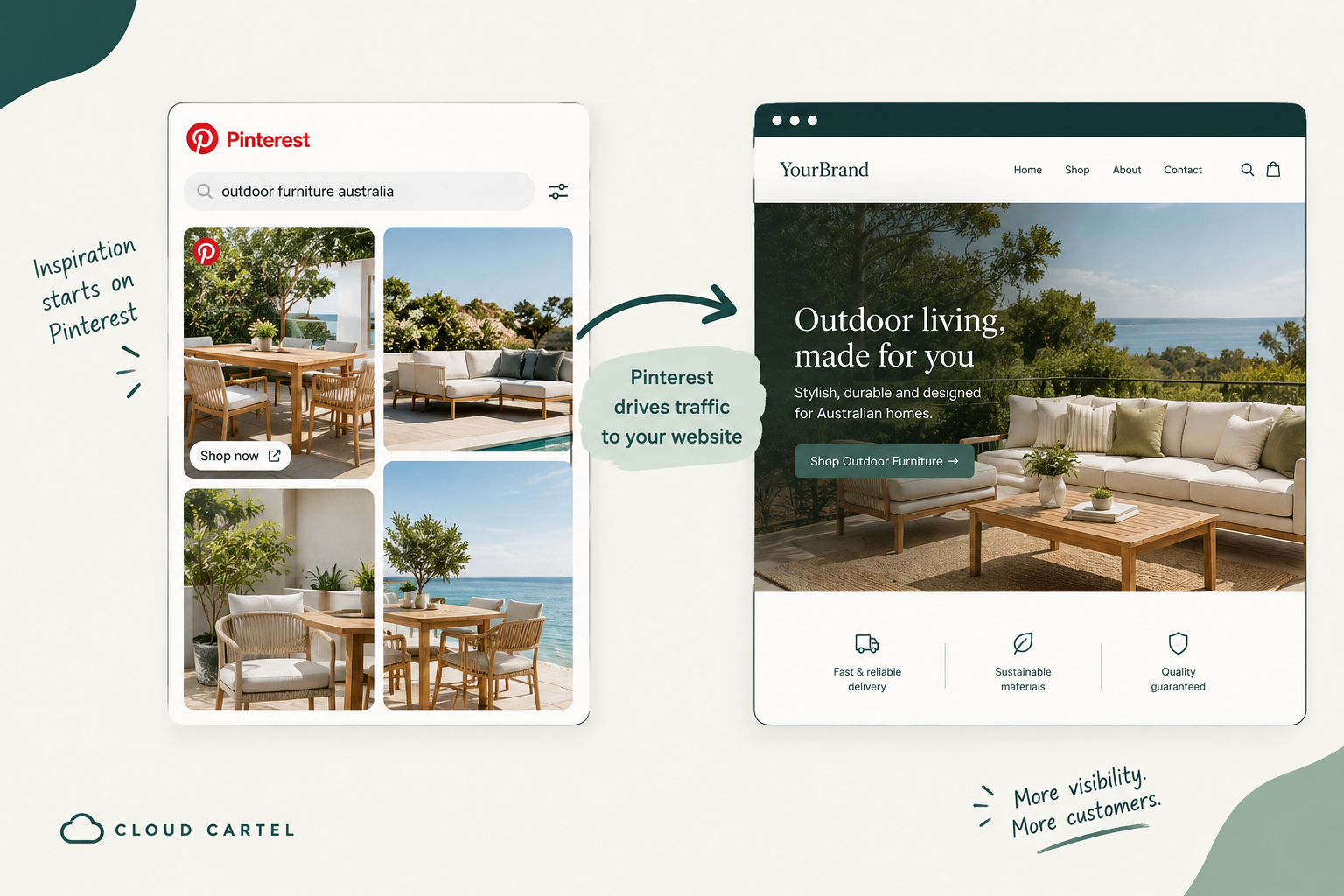
When someone saves a Pin, it can continue driving traffic to your website for months, sometimes years, after you posted it. That is because Pinterest functions more like Google than Instagram. Users type in what they are looking for, browse results, and click through to websites. The intent behind that behaviour is much closer to a search query than a social scroll.
This matters enormously for small businesses. Content you create today can keep working for you long after you have moved on to other things. That kind of compounding return is rare in digital marketing.
Pinterest users also tend to be in a planning and purchasing mindset. Research consistently shows that a significant proportion of weekly Pinterest users have made a purchase based on content they discovered on the platform. This is not passive browsing. These are people actively looking for ideas, products, and services, and they are ready to act.
For Perth businesses operating in competitive markets, visual search marketing Australia represents a genuine opportunity to reach high-intent customers without the rising costs of paid advertising on other platforms.
Who Should Be Using Pinterest in Australia?
Pinterest is not the right fit for every business, but it is a strong match for more industries than most people realise. If your business has a visual element, there is likely an audience waiting for you on Pinterest.
Industries that tend to perform particularly well include:
- Home decor, furniture, and interiors
- Fashion, accessories, and lifestyle products
- Food, hospitality, and catering
- Wedding and events services
- Health, wellness, and beauty
- Architecture, landscaping, and renovation
- Gifts, homewares, and eCommerce retailers
- Creative services including graphic design and branding
Consider a Perth-based homewares retailer. Rather than competing for attention in a crowded Instagram feed, they could be appearing in search results when someone types “coastal living room ideas” or “Hamptons bedroom decor Australia.” That search intent is far more valuable than a passive scroll. Or think about a wedding planner based in the Swan Valley. Pinterest is where couples begin their planning journey, often months or years before they book a vendor. Showing up consistently in those early searches builds brand awareness and trust long before a potential client ever picks up the phone.
Getting Started: Pinterest SEO for Small Business
One of the most important things to understand about Pinterest is that it rewards good SEO practices. Pinterest SEO for small business is not complicated, but it does require a deliberate approach.
Optimise Your Profile
Your Pinterest business profile should clearly communicate who you are and what you offer. Use your primary keywords naturally in your profile name and bio. If you are a Perth-based interior designer, say so. If you sell handmade jewellery online, make that clear. Pinterest uses this information to understand what your account is about and who to show it to.
Create Boards With Purpose
Each board on your Pinterest account should have a clear theme and a keyword-rich title and description. Think about the terms your ideal customers are searching for, and build boards around those topics. A Perth cafe might create boards around “Perth brunch spots,” “cafe interior design ideas,” and “coffee recipes to try at home.”
Write Keyword-Rich Pin Descriptions
Every Pin you create should have a description that naturally incorporates relevant keywords. This is how Pinterest understands your content and matches it to user searches. Keep descriptions helpful and informative rather than keyword-stuffed. Write for the person reading it, not just the algorithm.
Use Rich Pins
Rich Pins automatically pull information from your website to enrich your Pins with additional detail. For product-based businesses, Product Rich Pins display real-time pricing and availability. For content creators and service businesses, Article Rich Pins pull through your page title and description. Setting up Rich Pins requires a small amount of technical configuration, but the payoff in visibility and click-through rates is well worth it.
Building a Pinterest Content Strategy That Works
Consistency is key on Pinterest. Unlike platforms where posting frequency can be sporadic, Pinterest rewards accounts that publish regularly. A steady stream of fresh, high-quality Pins signals to the algorithm that your account is active and worth promoting.
Here are some practical content strategies for Australian SMEs:
- Repurpose existing content. Turn blog posts, product pages, and service descriptions into Pins. Each piece of content on your website can become multiple Pins with different images and angles.
- Create seasonal content in advance. Pinterest users plan ahead. Content related to Christmas, summer entertaining, or back-to-school season should be published weeks or even months before the event.
- Use vertical images. Pinterest is a mobile-first platform. Vertical images (a 2:3 ratio works well) take up more screen space and tend to perform better than square or landscape formats.
- Add text overlays to images. A clear headline on your Pin image helps users understand what they will find when they click through. This is particularly effective for blog content and how-to guides.
- Link every Pin to a relevant page on your website. Every Pin is an opportunity to drive traffic. Make sure the destination page delivers on the promise of the Pin.
Pinterest for eCommerce: A Direct Sales Channel
For businesses selling products online, Pinterest for eCommerce Australia is becoming an increasingly important channel. Pinterest Shopping features allow businesses to connect their product catalogue directly to their Pinterest account, making it possible for users to browse and purchase products without leaving the platform.
This is a significant development for Perth-based eCommerce businesses. Rather than relying solely on Google Shopping or Facebook Ads to drive product discovery, Pinterest offers an additional channel where users are actively searching for products to buy.
Setting up a Pinterest Shop requires connecting your website’s product catalogue to your Pinterest business account. For businesses running on Shopify or WooCommerce, this process is relatively straightforward and can open up a new stream of organic and paid traffic.
Should You Invest in Pinterest Ads?
Organic Pinterest marketing can deliver strong results on its own, but Pinterest Ads offer a way to accelerate growth and reach a larger audience. Pinterest advertising tends to be more cost-effective than advertising on Meta platforms, and the targeting options allow you to reach users based on their interests, search behaviour, and demographics.
For small businesses with limited advertising budgets, Pinterest Ads can be a smart addition to a broader social media marketing Perth strategy. Promoted Pins blend naturally into the feed and search results, making them feel less intrusive than traditional display advertising.
If you are new to Pinterest Ads, starting with a small budget to test what resonates with your audience is a sensible approach. Focus on your best-performing organic Pins first, as these are likely to perform well as paid promotions too.
Real-World Application: Perth Businesses on Pinterest
To make this more concrete, consider how different Perth businesses might approach Pinterest marketing Australia:
A Fremantle fashion boutique could create boards around seasonal outfit ideas, styling tips, and behind-the-scenes content from their store. By consistently pinning high-quality product images with keyword-rich descriptions, they build a presence in searches like “boho summer outfits Australia” or “ethical fashion Perth.”
A Perth landscape designer could showcase completed projects, plant guides, and garden inspiration boards. Homeowners planning a renovation often start their research on Pinterest, making it an ideal platform for service-based businesses with strong visual portfolios.
A Swan Valley wedding venue could build boards around ceremony styling, reception decor, and local vendor recommendations. Couples planning their wedding use Pinterest extensively in the early stages, and appearing in those searches builds awareness and credibility.
In each case, the strategy is the same: create content that answers the questions your ideal customers are already asking, and make it easy for them to find their way to your website.
What This Means for Your Business
Pinterest is not a platform to dismiss. For Australian small businesses with a visual product or service, it represents a genuine opportunity to reach high-intent customers, drive consistent website traffic, and build brand awareness over time.
The businesses that invest in Pinterest marketing now, while many of their competitors are still ignoring it, will be the ones reaping the rewards in the months and years ahead.
Getting started does not have to be complicated. A well-optimised profile, a handful of purposeful boards, and a consistent approach to creating and sharing content can make a meaningful difference to your online visibility.
If you are ready to explore what Pinterest marketing could do for your Perth business, or if you want to build a broader social media strategy that actually delivers results, Cloud Cartel can help. We work with Australian SMEs to cut through the noise and focus on the digital channels that matter most for their growth.
Frequently Ask Questions
Is Pinterest good for small businesses in Australia?
Yes. Pinterest can be useful for Australian small businesses that rely on visual content to attract customers, such as home décor brands, fashion retailers, wedding businesses and food businesses. It can help people discover products, find inspiration and visit a business’s website. Results depend on the business, its audience and its content strategy.
How do I set up Pinterest for my business?
Start by creating a Pinterest business account and completing your profile with your business name, description and website. Create relevant boards, use keywords that match what your audience searches for, and publish high-quality Pins that link to useful pages on your website. Review your Pinterest analytics to understand which content performs best.
What types of businesses benefit most from Pinterest marketing?
Businesses with visually appealing products, services or ideas may benefit from Pinterest marketing. Examples include fashion and beauty brands, interior designers, home décor retailers, wedding planners, travel businesses and food businesses. However, suitability depends on whether their target audience uses Pinterest and whether the platform supports their marketing goals.
How can Pinterest help drive website traffic?
Pinterest can help people discover content through search results, recommendations and saved Pins. By creating useful, visually appealing Pins with relevant keywords and links to appropriate website pages, businesses can encourage interested users to learn more. Traffic is not guaranteed, so businesses should monitor clicks and other relevant analytics.
How to Set Up Pinterest for Your Small Business
1. Create a Pinterest business account. Use your business name and complete your profile with an accurate description of your products or services.
2. Claim your website. Follow Pinterest’s current instructions to claim your website where supported. This can help connect your website with your Pinterest presence and provide access to relevant analytics.
3. Create relevant boards. Organise your Pins into boards that reflect your products, services and the topics your audience is interested in.
4. Optimise your Pins for search. Use clear titles, helpful descriptions and relevant keywords naturally. Choose vertical images that display well in the Pinterest feed.
5. Link Pins to useful website pages. Direct users to relevant product pages, service pages, blog articles or landing pages rather than unrelated content.
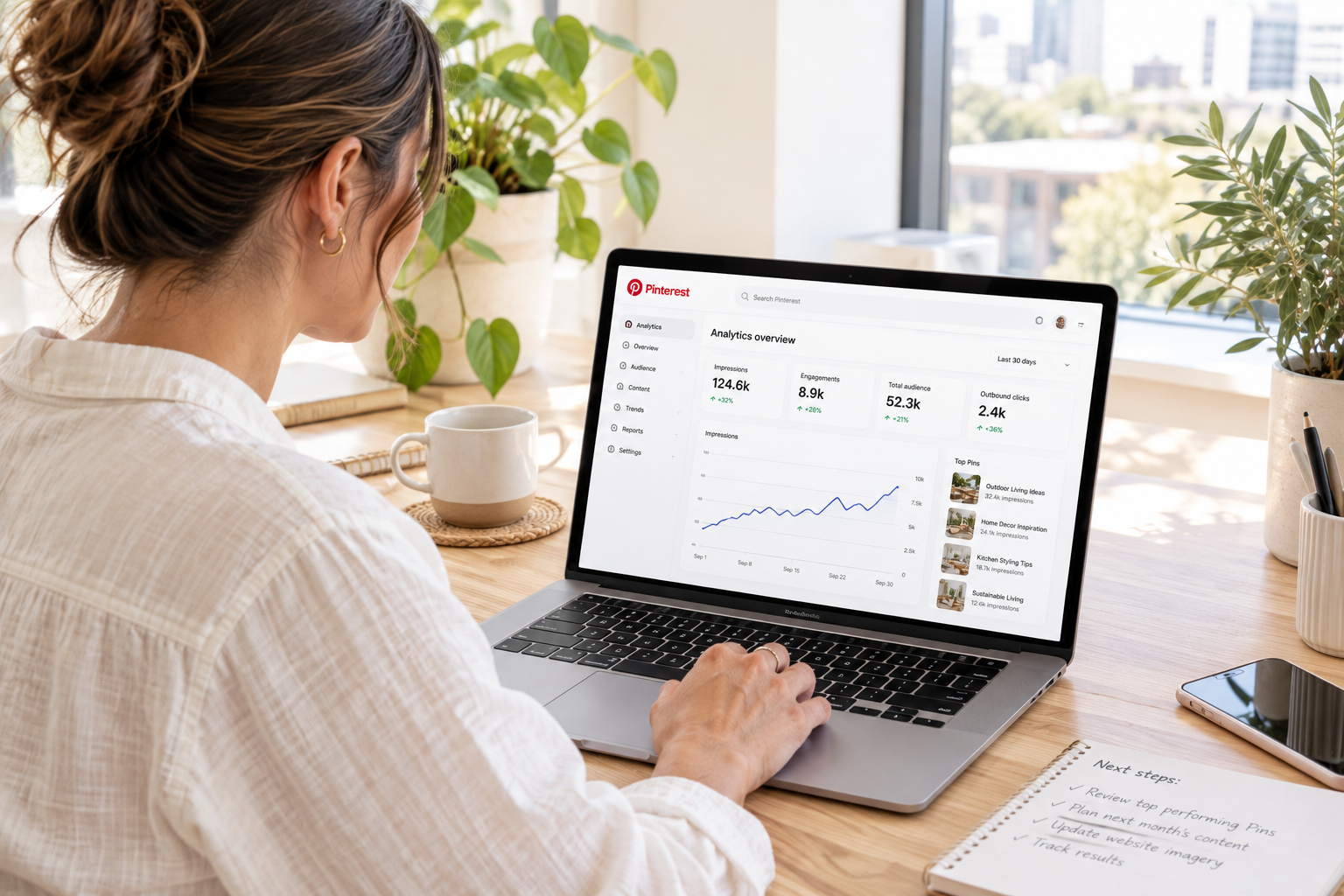
6. Review performance. Use Pinterest analytics to monitor impressions, saves and outbound clicks, then refine your content based on what your audience responds to.
