Imagine your customers being able to visualise your products in their own space before they buy. Imagine them trying on clothes virtually, seeing how furniture fits in their lounge room, or testing how a paint colour looks on their walls. This isn’t science fiction anymore. Augmented reality (AR) in eCommerce is becoming a practical tool that Perth and Western Australian small businesses can use to boost sales, reduce returns and create genuinely memorable shopping experiences.
If you’re running an online store and haven’t considered AR yet, you’re missing out on a significant competitive advantage. Let’s explore what AR in eCommerce actually means, why it matters for your business, and how you can get started.
What Is Augmented Reality in eCommerce?
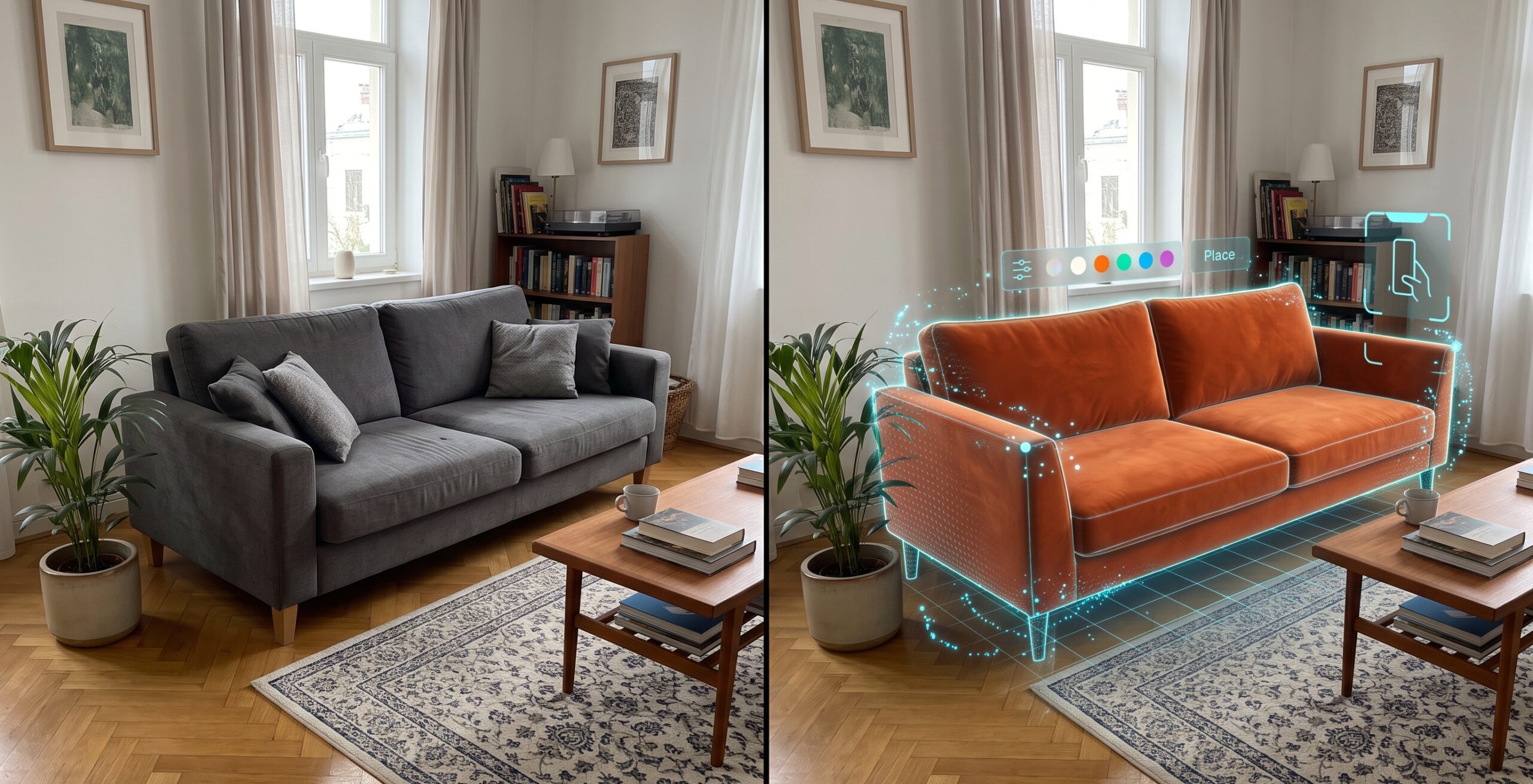
Augmented reality overlays digital elements onto the real world through a smartphone camera or AR-enabled device. In eCommerce, this means customers can see your products in their actual environment before making a purchase decision.
Unlike virtual reality, which creates an entirely digital world, AR enhances reality by adding digital layers to it. Your customer opens their phone, points the camera at their space, and your product appears there in real time. They can rotate it, resize it, and see exactly how it looks in context.
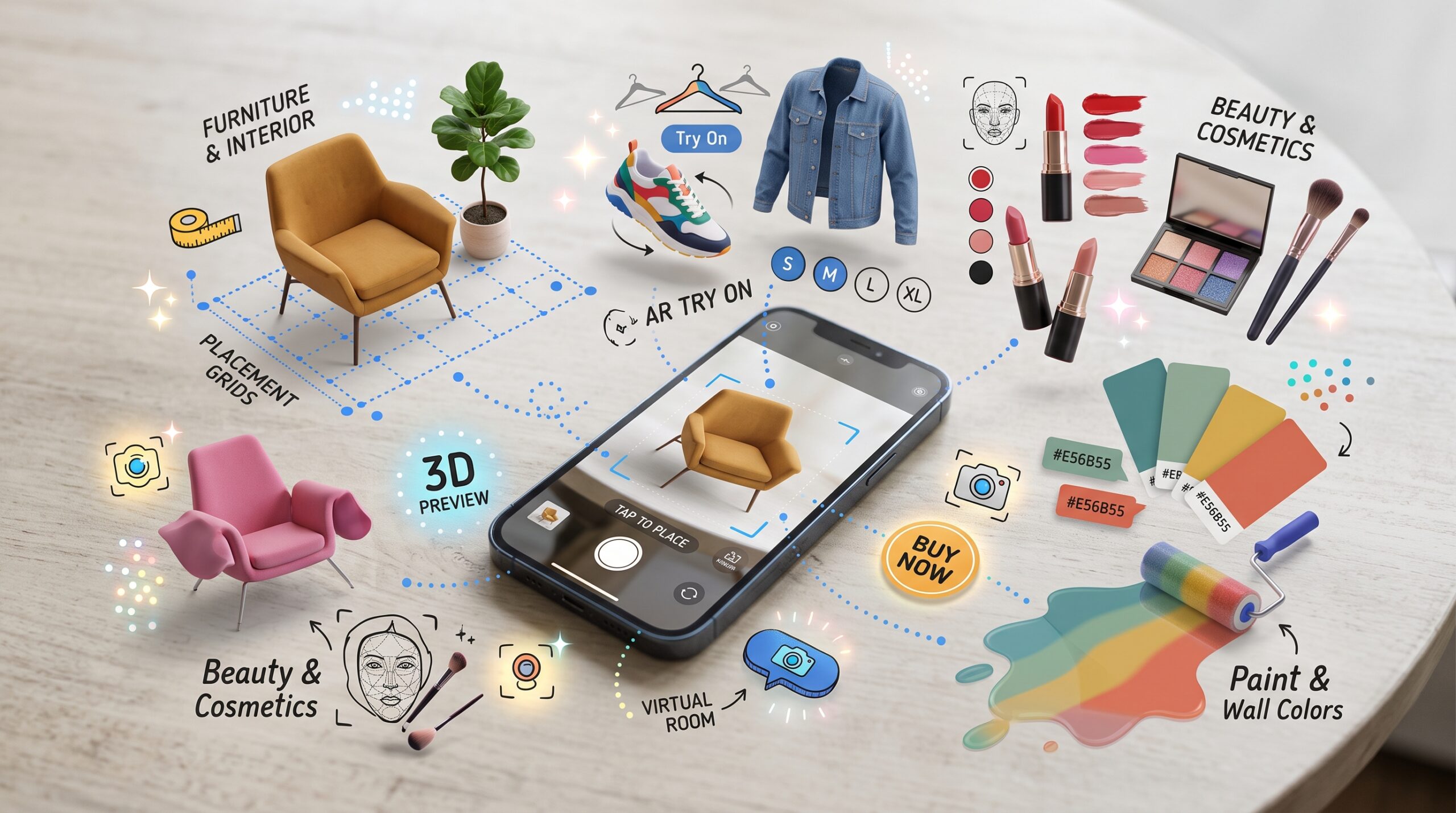
Common AR applications in online retail include:
- Virtual try-ons for clothing, glasses and makeup
- Furniture visualisation in home spaces
- Paint colour previews on walls
- Jewellery try-ons on wrists and fingers
- Cosmetics application simulations
- Product size and scale visualisation
For Perth businesses selling physical products online, AR transforms the shopping experience from flat product images into something interactive and tangible.
Why AR Matters for Your eCommerce Business
You might be thinking: “This sounds impressive, but does it actually drive business results?” The answer is yes. Here’s why AR is becoming essential for online retailers.
Reduced Returns and Increased Confidence
One of the biggest challenges with online shopping is that customers can’t physically inspect products before buying. This uncertainty leads to higher return rates, which directly impacts your bottom line. When customers use AR to visualise products in their own environment, they make more informed decisions. They’re more confident in their purchase, which means fewer returns and happier customers.
Improved Customer Engagement
AR creates an interactive, engaging shopping experience. Customers spend more time exploring your products when they can visualise them in 3D and in context. This extended engagement often translates into higher conversion rates and increased average order values.
Competitive Differentiation
Whilst AR adoption is growing, many small businesses haven’t implemented it yet. For Perth and WA businesses, offering AR functionality can set you apart from competitors and position your brand as innovative and customer-focused.
Better Product Understanding
AR helps customers truly understand what they’re buying. Scale, dimensions, colours and how products work together become immediately clear. This reduces post-purchase disappointment and builds trust in your brand.
AR eCommerce Trends in Australia 2026
The Australian eCommerce landscape is evolving rapidly. Several trends are shaping how AR is being used:
Mobile-First AR Experiences: Most Australian customers access eCommerce through mobile devices. AR technology is optimised for smartphones, making it naturally suited to how Australians shop online.
Platform Integration: Major eCommerce platforms like Shopify are making AR tools more accessible. You no longer need custom development to add AR to your store.
Industry-Specific Solutions: Different industries are developing tailored AR experiences. Fashion retailers, furniture companies, beauty brands and home improvement businesses are leading the way.
Social Commerce Integration: AR is increasingly integrated into social shopping features, allowing customers to try products whilst browsing social media.
Accessibility Focus: AR tools are becoming easier to use, requiring no special apps or complex setup from customers.

How to Implement AR in Your Online Store
If you’re ready to explore AR for your business, here’s what you need to know.
Start with Your Product Category
Not all products benefit equally from AR. Consider which of your products would most benefit from visualisation:
- Do customers struggle to understand scale or dimensions?
- Would seeing the product in context help them make better decisions?
- Are returns high for specific product categories?
- Would AR reduce customer hesitation or uncertainty?
Focus on product categories where AR will have the most impact.
Choose the Right Platform
If you’re using Shopify, AR tools are increasingly built in or available through apps. WordPress and WooCommerce users have options too, though implementation may require more technical work. The right platform depends on your current setup and technical capabilities.
Consider Your Budget
AR implementation ranges from simple 3D product models to fully interactive experiences. You don’t need to start with the most sophisticated solution. Many Perth businesses begin with basic AR product visualisation and expand from there.
Work with Experts
If AR feels overwhelming, that’s where specialists come in. A digital agency experienced in eCommerce can help you assess whether AR makes sense for your business, choose the right tools, and implement them effectively.
Practical AR Use Cases for Perth Businesses
Let’s look at real-world examples of how different types of businesses can use AR:
Fashion and Accessories: Virtual try-ons for clothing, shoes, glasses and jewellery help customers see how items look on them before purchasing.
Furniture and Home Decor: Customers can place furniture in their rooms to see scale, colour and fit. This dramatically reduces returns for home goods.
Beauty and Cosmetics: AR makeup try-ons let customers see how products look on their skin tone and features.
Home Improvement: Paint colours, flooring and wall coverings can be visualised in actual customer spaces.
Sports and Outdoor Gear: Customers can see how equipment looks and understand scale before committing to a purchase.
Getting Started with AR: Your Next Steps
If you’re convinced that AR could benefit your business, here’s how to move forward:
- Audit Your Current Store: Review your product catalogue and identify which items would benefit most from AR visualisation.
- Assess Your Technical Setup: Understand your current eCommerce platform and what AR options are available to you.
- Research AR Tools: Explore platforms like Shopify’s AR features, third-party AR apps, or custom solutions depending on your needs.
- Start Small: Don’t try to implement AR across your entire catalogue immediately. Begin with your top-performing or highest-return products.
- Measure Results: Track how AR impacts your conversion rates, return rates and customer satisfaction. Use this data to decide whether to expand.
- Seek Professional Guidance: If you’re unsure about implementation, consult with a digital agency that understands both eCommerce and emerging technologies.
The Future of AR in Australian eCommerce
Augmented reality isn’t a gimmick or a distant future technology. It’s here now, and it’s becoming increasingly accessible to small businesses. As more customers become comfortable with AR shopping experiences, expectations will shift. Businesses that adopt AR early will build customer loyalty and competitive advantage.
For Perth and Western Australian businesses, AR represents an opportunity to compete with larger retailers by offering superior customer experiences. You don’t need a massive budget or complex technology. You need the right strategy, the right tools, and expert guidance.
Making AR Work for Your Business
Augmented reality transforms how customers interact with your products online. It reduces uncertainty, increases confidence and creates memorable shopping experiences. For Perth businesses looking to stand out in a competitive eCommerce landscape, AR is a powerful tool worth exploring.
The technology is accessible. The benefits are clear. The time to act is now. Whether you’re selling fashion, furniture, beauty products or anything in between, AR can help you build a better online store and happier customers.
Ready to explore how AR could transform your eCommerce business? Start by assessing your product catalogue, understanding your current platform capabilities, and reaching out to experts who can guide you through implementation. Your customers are ready for better shopping experiences. AR is how you deliver them.
